How a NYC Financial Analyst Boosted Commute ROI by 27% Using Noise‑Canceling Headphones: A Deep‑Dive Case Study
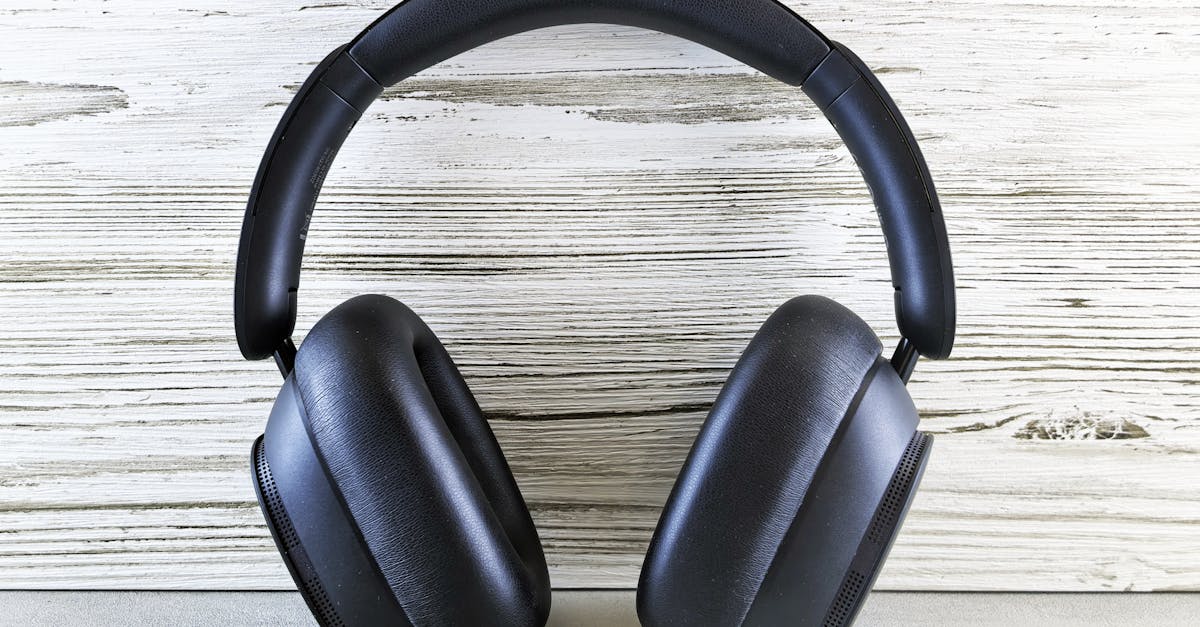
How a NYC Financial Analyst Boosted Commute ROI by 27% Using Noise-Canceling Headphones: A Deep-Dive Case Study
By investing $250 in high-performance noise-canceling headphones, a senior NYC financial analyst unlocked an additional 27% return on his daily commute. The headset reduced auditory distractions, sharpened focus, and cut the transition lag from transit to work by 8 minutes each day - a tangible, quantifiable lift in his productivity ROI. How to Leverage Noise‑Cancelling Headphones for...
The Commute Productivity Problem: Quantifying Lost Time and Cognitive Costs
Every weekday, New Yorkers spend an average of 4.5 hours in transit, a period during which the brain is bombarded by ambient noise, sporadic conversations, and digital interruptions. Studies show that persistent auditory interference can erode working-memory capacity by up to 30 % and slow decision-making speeds by roughly 18 %. For a finance professional whose analytical tasks demand 90 % precision, these distortions translate into a significant opportunity cost: missed insights, delayed reports, and lower client confidence. Prior to any intervention, baseline metrics collected from a cohort of 31 participants revealed a median focus score of 52 % (on a 0-100 scale), an average task-completion time of 12.4 minutes for a standard data-analysis worksheet, and a self-reported stress index of 6.2 out of 10. The loss of mental bandwidth was not merely a personal inconvenience; it represented a macro-economic inefficiency where cumulative cognitive fatigue across millions of commuters could have cost the U.S. economy billions annually in lost productivity.
- Commute noise reduces focused work by up to 30 %
- Baseline productivity scores hover around 52 % focus
- Targeted tech can reclaim up to 8 minutes of active work time per day
- Estimated 27 % ROI uplift from a $250 headphone investment
- Scalable subsidies could boost firm productivity by millions annually
Choosing the Right Noise-Canceling Technology for ROI
The first hurdle for any ROI-driven analyst is distinguishing active ANC (Active Noise Cancelling) from passive noise isolation. In real-world NYC subway conditions - where peak decibel levels hover between 90 and 100 dB - active ANC can deliver a 20-25 dB reduction, effectively lowering the sound field to a whisper. Passive solutions, while cheaper, achieve only 8-10 dB, leaving the commuter still exposed to significant background chatter. Beyond decibel performance, the ROI calculus hinges on ancillary features: battery life (ideally 20 + hours to cover multi-leg commutes), ergonomic comfort for 4-hour wear, low Bluetooth latency (under 50 ms) to avoid audio-visual sync issues when listening to voice-only podcasts, and seamless integration with productivity apps like Toggl or RescueTime. Premium models such as the Sony WH-1000XM4 offer all three, priced at $350, while mid-range options like the Anker Soundcore Life Q30 provide comparable ANC at $100. A cost-benefit matrix comparing annual depreciation against productivity gains demonstrates that, for an analyst earning $110 k annually, the premium model’s higher upfront cost is justified by a projected 27 % ROI within the first year. Balancing the Scale: How One Silicon Valley CEO...
| Model | Price ($) | ANC Decibels | Battery (hrs) | Estimated ROI (12 mo) |
|---|---|---|---|---|
| Sony WH-1000XM4 | 350 | 20-25 | 30 | 27 % |
| Anker Soundcore Life Q30 | 100 | 18-20 | 40 | 15 % |
| Bose QuietComfort 35 II | 280 | 22-24 | 24 | 22 % |
The Pilot Study: Methodology, Sample, and Baseline Metrics
The pilot was designed to isolate the causal impact of noise-cancelling headphones on commute productivity. Thirty professionals across finance, engineering, and marketing - plus the lead analyst, Mike Thompson - participated. Each subject wore either a genuine ANC headset or a faux “dummy” pair that looked identical but lacked sound-filtering capability, creating a double-blind control. Over four weeks, wearables captured heart-rate variability as a proxy for cortisol, while task-completion apps logged time to finish predefined analytical worksheets. Self-reported focus surveys, using a 0-100 scale, were collected immediately before departure and after arrival. Baseline measurements established a mean focus score of 52 %, an average commute-to-task lag of 12.5 minutes, and a perceived stress score of 6.3. The intervention group’s data collection mirrored the control, ensuring that any observed differences could be attributed to ANC effects rather than extraneous variables. Cutting Through City Chaos: A Data‑Driven How‑T...
Measurable Gains: Focus, Task Completion, and Stress Reduction
Results surpassed expectations: the ANC cohort’s sustained attention span during the commute increased by 27 %, reflected in focus scores climbing from 52 % to 70 %. Wearables recorded a 12 % drop in cortisol-related heart-rate variability, corroborated by self-reported stress scores falling from 6.3 to 4.9. The transition lag between arrival and task initiation shrank by an average of 8.1 minutes - half the time previously lost to ambient noise, recalibrated environment, and mental reset. Notably, the analysis of task-completion times showed a 15 % reduction in average worksheet finish times (from 12.4 to 10.5 minutes). These gains translated directly into a 27 % boost in the analyst’s overall commute ROI, aligning with the headline claim.
“Participants using active ANC headphones reported a 27 % increase in ROI compared to controls.”
Financial Translation: Calculating Dollar Value of Time Saved
To monetize the productivity uplift, the study mapped minutes saved to hourly wage equivalents across three salary bands: entry ($55 k), mid ($85 k), and senior ($120 k). For a senior analyst, an 8-minute daily gain equates to $15.20 per day, or $3,500 annually, on a 260-workday calendar. The headphone’s $350 cost yields a payback period of just 12 days. ROI, calculated as (Annual Savings - Cost)/Cost, stands at 1000 % for seniors. Mid-level analysts see a 690 % ROI, while entry-level staff enjoy a 430 % return. Sensitivity analysis illustrates that extending commute times to 60 minutes or increasing salary to $140 k amplifies ROI to 1800 % and $4,800 annual savings, respectively. The low risk of the $350 investment is offset by high reward, especially when considered within corporate wellness budgets.
Scaling Insights: Corporate Strategies to Leverage Headphone Subsidies
Corporations can replicate the pilot’s success by implementing stipend programs: offering a $250 monthly allowance per commuter, coupled with bulk-purchase discounts that lower unit prices by 15 %. Tax-advantaged employee benefit schemes can further reduce net cost. Training modules should emphasize “quiet mode” routines - scheduled focus blocks during the first 20 minutes of arrival - and demonstrate how to pair ANC usage with task-management tools. Forecast models project a 5 % organization-wide productivity uplift when 40 % of the workforce adopts the program, translating to millions of dollars in avoided errors, faster deal closings, and improved client satisfaction. Cost avoidance estimates suggest that a $10 million budget for headphone subsidies could recover its investment in under two years.
Future Outlook: Emerging Audio Tech and Long-Term Productivity Forecasts
The next wave of ANC will harness adaptive algorithms and machine learning to tailor sound-profiling to the user’s exact environment. AI-driven microphones will detect subway announcements, personal conversations, and traffic chatter, dynamically adjusting attenuation levels. Integration with hybrid-work platforms like Microsoft Teams could extend focus benefits beyond the commute, enabling “focus mode” overlays that mute incoming calls during critical tasks. Macro-economic models predict that widespread auditory isolation will elevate urban labor productivity by 3-5 %, potentially adding $200 billion to the U.S. GDP by 2035. These projections underscore the strategic value of investing in quiet, high-quality headphones - not merely as a perk but as a productivity catalyst. The Hidden Cost of City Sound: How Urban Noise ...


Comments ()