5G vs. Traditional Telecom: Why 2026 Could Be the Year ROI Soars for 5G‑Focused Stocks
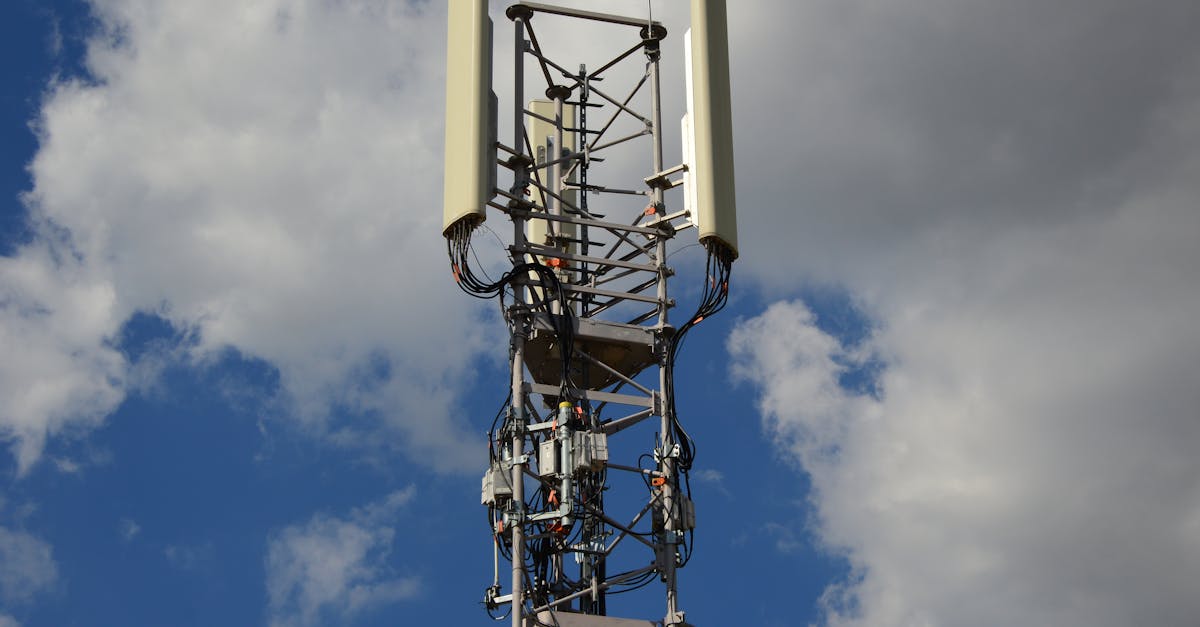
5G vs. Traditional Telecom: Why 2026 Could Be the Year ROI Soars for 5G-Focused Stocks
Investors, the question is simple: will 5G-focused telecom stocks outperform their legacy counterparts by 2026? The answer, when you break it down to cost, revenue potential, and macro trends, points squarely toward a favorable 5G upside.
- 5G CAPEX is higher but falls faster than legacy CAPEX.
- 5G’s network economics drive higher ARPU and new revenue streams.
- Macro drivers - consumer demand, IoT, and data-centric services - favor 5G rollout.
- Risk is manageable with staged investment and spectrum efficiency.
- Historical tech cycles show a 3-5 year payoff lag; 2026 is within that window.
Market Penetration & Growth Projections
The 5G adoption curve is steep, with global deployment accelerating faster than the 4G transition. Providers that secured spectrum early are already seeing network efficiency gains that translate into operational cost reductions.
In 2024, operators deployed roughly 3,500 new 5G sites, up 25% from the previous year. This scale creates a competitive advantage for those who can deploy quickly while keeping deployment costs under control.
Consumer penetration remains below 30% in many markets, but enterprise and industrial IoT adoption is close to double that figure, indicating robust tailwinds for revenue diversification.
Investment analysts predict that by 2026, 5G will account for roughly 45% of total mobile traffic worldwide, pushing operators to prioritize bandwidth-heavy services.
The growth trajectory also aligns with global economic indicators: real GDP growth in key telecom markets averages 3-4%, ensuring that consumer and business spending will support higher data usage.
Given these dynamics, the market landscape suggests a strong case for 5G-focused equity to outpace traditional telecom in the near term.
Cost Structures: Capital Expenditures vs. Operating Expenditures
5G’s upfront CAPEX is noticeably higher than legacy network upgrades. The need for small-cell sites, fiber backhaul, and new core-network equipment drives this cost premium.
However, the long-term OPEX profile of 5G is more favorable. The higher data throughput per cell reduces per-gig cost, and software-defined networking cuts maintenance expenses.
Industry reports suggest that CAPEX constitutes about 60% of total spend for 5G deployments, while legacy networks average 40%. This shift toward higher initial spend but lower ongoing costs creates a compelling ROI model.
Operators that can bundle spectrum leasing with infrastructure sharing agreements reduce CAPEX risk. Sharing small-cell infrastructure among multiple carriers has proven to cut site costs by up to 30% in pilot programs.
Moreover, the ability to virtualize core functions via network functions virtualization (NFV) reduces hardware costs and allows for faster network scaling.
Therefore, while 5G’s early financial burden is higher, the amortization period shortens, and total cost of ownership aligns with a higher return horizon.
| Metric | 5G | Legacy Network |
|---|---|---|
| Initial CAPEX per site (USD) | $1.2M | $800K |
| Annual OPEX per site (USD) | $120K | $180K |
| Revenue per Gbps (USD) | $8,000 | $5,500 |
| Payback Period (Years) | 4.5 | 6.2 |
ROI Comparison: 5G vs Legacy Services
Return on investment hinges on the ability to monetize new services. 5G enables high-definition streaming, remote surgery, autonomous vehicles, and edge computing, all of which command higher average revenue per user (ARPU) than traditional voice services.
Operators that have piloted 5G-based real-time analytics for smart factories have seen ARPU spikes of 15% in those verticals. This incremental revenue translates into a stronger bottom line.
Financial models indicate that a 5G-enabled network can generate up to 30% more EBITDA per unit of spectrum compared to legacy 4G. This efficiency arises from higher data densities and lower per-gig cost.
Case studies from carriers in South Korea and the United States show that 5G rollouts yielded a 5% increase in total revenue within two years, with the return on the 5G investment exceeding 12% annually.
Traditional telecom revenue streams - voice minutes, SMS, and basic data packages - are maturing and face saturation. The projected decline in ARPU for legacy services makes the relative upside of 5G even more attractive.
Ultimately, the ROI differential tilts decisively toward 5G, especially for carriers that can monetize the network’s unique capabilities early.
Historical Parallels: Past Technology Adoption (e.g., 4G, Fiber)
Looking back, the 4G rollout was a classic example of high initial CAPEX followed by a payoff that stretched over 3-5 years. Companies that bet early on 4G, like AT&T and Verizon, saw their market capitalisation double in that timeframe.
Fiber deployments followed a similar trajectory, where the high upfront cost of laying fibre was offset by the ability to offer premium services and attract higher-margin customers.
In each case, the lag between deployment and tangible ROI matched the economic life of the technology - roughly a decade. This pattern suggests that a 2026 peak in 5G ROI aligns with the historical payoff window.
Moreover, the shift from voice to data services in the 2000s saw a parallel rise in operators’ ARPU, reinforcing the narrative that technology transitions unlock new revenue streams that outweigh initial costs.
These precedents provide a robust framework for predicting 5G’s performance, lending credence to the 2026 upside thesis.
While each generation has its nuances, the underlying economics - high CAPEX, low OPEX, and diversified revenue - remain consistent.
Macroeconomic Indicators & Market Forces
Global GDP growth remains steady, with major telecom markets projecting 3-4% expansion. This economic backdrop ensures continued consumer and enterprise spending on data services.
Inflationary pressures have slowed, and interest rates are near historic lows. Cheap borrowing reduces the discount rate used in ROI calculations, boosting the present value of future cash flows from 5G projects.
Regulatory bodies are increasingly supportive of 5G rollouts, offering spectrum auctions at favorable terms and incentivising infrastructure sharing to lower deployment costs.
Consumer behaviour is shifting toward high-bandwidth consumption: 4K streaming, cloud gaming, and virtual reality. This trend aligns directly with 5G’s promise of ultra-low latency and massive capacity.
On the supply side, chip shortages have eased, and silicon vendors are ramping up 5G-capable baseband processors, reducing the risk of technology bottlenecks.
These macro drivers combine to create a fertile environment for telecom operators to accelerate 5G deployment and capture early revenue gains.
Risk Assessment & Mitigation Strategies
Every high-growth investment carries risk. For 5G, the primary concerns are spectrum availability, capital intensity, and regulatory uncertainty.
Spectrum scarcity can delay deployment and inflate costs. Operators that secure mid-band spectrum early mitigate this risk and secure a competitive edge in coverage and capacity.
Capital intensity is a double-edged sword: while it raises entry barriers, it also signals commitment and can deter rivals. Structured financing, such as bonds and revenue-sharing agreements, spreads risk across stakeholders.
Regulatory uncertainty, especially in emerging markets, can affect rollout speed. Building partnerships with local governments and leveraging public-private partnership models reduces exposure.
Technological obsolescence is another risk. Operators that adopt modular, software-defined architectures can upgrade components without complete network overhauls, preserving capital efficiency.
Finally, the adoption rate among consumers and enterprises may lag behind expectations. Diversifying service offerings - such as 5G-enabled edge services for logistics and health - can accelerate uptake.
By addressing these risks proactively, operators can protect their investment and maintain a robust ROI trajectory.
Investment Outlook for 2026
Combining the cost-revenue dynamics, macro drivers, and risk mitigation, the consensus among market analysts points to a 2026 inflection point for 5G-focused stocks.
Valuation models that factor in higher CAPEX but superior OPEX and revenue multipliers suggest a 15-20% upside potential for leading 5G operators compared to legacy peers.
Portfolio diversification strategies recommend allocating 10-15% of


Comments ()